- About
- Programs
- Faculty of Graduate Studies and Research
- PhD in Business and Management Studies
- PhD in Information and Communication Technology
- Master of Science in Information Technology (MSc.IT)
- Master of Science in Cyber Security and Forensics
- Master of Science in Digital Finance and Technology
- Master of Science in Public Health (General)
- Master of Science in Public Health – Health Informatics
- Master of Science in Public Health – Epidemiology and Biostatistics
- Master of Business Administration (MBA)
- Faculty of ICT
- Master of Science in Information Technology (MSc.IT)
- Master of Science in Cyber Security and Forensics
- Bachelor of Science in Animation and Visual Effects (B.Sc. VFX)
- Bachelor of Science in Applied Information Technology (B.Sc. AIT)
- Bachelor of Science in Artificial Intelligence and Machine Learning (B.Sc. AI & ML)
- Bachelor of Science in Networking and Cyber Security (B.Sc. NCS)
- Bachelor of Science in Computer Science (B.Sc. CS)
- Faculty of Health Sciences
- Faculty of Business & Commerce
- Master of Science in Digital Finance and Technology
- Master of Business Administration (MBA)
- Bachelor of Business Administration in International Marketing (BBA-IM)
- Bachelor of Business Administration in International Business (BBA-IB)
- Bachelor of Hotel Management (BHM)
- Bachelor of Human Resource Management (BHRM)
- Bachelor of Science in Applied Economics (BSc-AE)
- B.Sc. Accounting and Finance
- Faculty of Engineering
- Diploma Programmes
- Pre-University / International Foundation
- Short Courses (Professional / Skill-based)
- Certified Cyber Security Specialist (CCSS)
- Certified Ethical Hacker (CEH) Certification
- Computer Hacking Forensic Investigator (CHFI) Certification
- ISBAT Certified Integrated IT Infrastructure Specialist Programme
- Data Science
- Python
- Cloud Computing
- Linux for Beginners
- Cyber Security for Beginners
- Certified Network Associate (CNA)
- PMP
- Faculty of Graduate Studies and Research
- ISBAT Online
- Research & Innovation
- Alumni
- Career
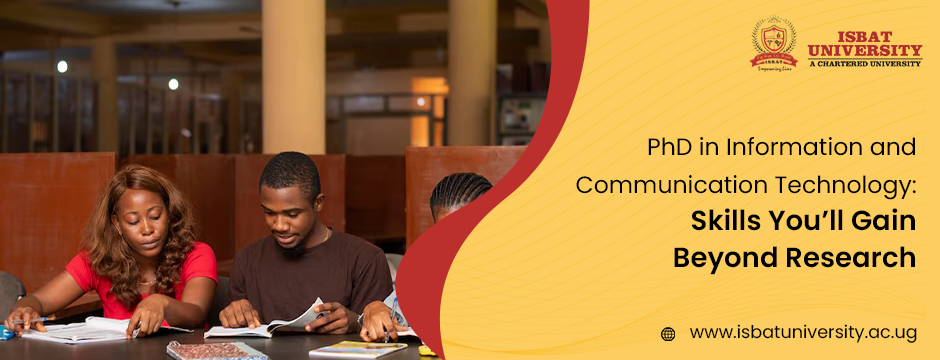
PhD in Information and Communication Technology: Skills You’ll Gain Beyond Research
February 17, 2026
Many students think a doctorate only builds research power, but the truth is very different and far deeper. A tech doctorate shapes how you think, speak, lead, and solve real problems in life and work. It also changes how you see failure and success as learning steps, not final results. In simple words, it changes you as a person from the inside. This journey is long, but it is also deeply rewarding for those who stay patient. You learn how to stay calm during stress and pressure. You learn how to plan big goals in small steps. You learn how to explain hard ideas in easy ways. These skills help in schools, companies, and new businesses every day. They also help in daily life and family choices. Therefore, choosing a PhD in Information and Communication Technology is not only about writing papers. It is also about building strong habits for life. In addition, you gain respect in many fields through your work. You also earn trust from teams and leaders. This blog explains those powerful skills. It focuses on growth beyond research work.
Advanced Critical Thinking and Problem Solving
During this journey, your mind changes step by step as you face new challenges often. You stop guessing and start testing ideas with proof. You break big problems into small parts so they feel easier to handle. Then you study each part calmly and carefully. As a result, you find better answers with less fear. This skill grows slowly but strongly over time. Many students gain it while working on a PhD in Information and Communication Technology projects. They face unclear questions often in real work. However, they learn to stay patient during confusion. They also learn to check facts before acting. In addition, they compare many solutions before choosing one. This habit helps in business and teaching roles later. It also helps during team conflicts. Therefore, critical thinking becomes a daily tool. It helps you decide wisely, even under pressure.
Analytical and Data Understanding Skills
Data becomes your close friend during doctoral study as you work with numbers daily. You read numbers like stories with meaning. You see patterns in noise that others miss. You test ideas using proof, not feelings. Many learners build this habit during a PhD in Information and Communication Technology training. They learn how to clean data carefully. They also learn how to explain results simply. This skill helps banks, hospitals, and tech firms. It also helps leaders plan better steps. Furthermore, it builds trust in your work. People respect clear proof. Therefore, your voice becomes stronger in meetings. You speak with facts, not guesses. That makes you valuable everywhere.
Communication Skills in Writing and Speaking
Strong ideas mean little without clear words to share them. A doctorate teaches you how to write clean and simple text for all readers. You learn to avoid heavy words that confuse people. You learn to guide readers step by step with care. This habit grows during reports and talks. It grows even more during PhD in Information and Communication Technology presentations. You speak to teachers, students, and business leaders often. Each group needs a different tone. Therefore, you learn to adjust your style. In addition, you gain teaching skills through practice. You answer questions with patience. You explain complex systems using easy examples. Over time, fear fades. Confidence grows. As a result, your voice carries weight. People listen when you speak.
Leadership and Team Handling
Research rarely happens alone, so teams become part of daily life. You guide juniors with care. You share tasks fairly. You fix conflicts calmly. This builds silent leadership skills over time. You do not shout. You listen first. Then you act wisely. During group projects, you learn to trust others. You also learn when to step forward. These habits grow deeper during long projects. They prepare you for future roles. You can manage labs or business teams later. Therefore, leadership becomes natural. It does not feel forced. It feels calm and steady.
Project and Time Control Skills
Doctoral work teaches deep respect for time. Deadlines rule your days clearly. Plans guide your weeks. You learn to divide goals into small steps. You track progress often. This skill grows strong during a PhD in Information and Communication Technology research planning. You manage papers, tests, and meetings together. Therefore, chaos slowly turns into order. Stress becomes easier to handle. You finish tasks without panic. This habit helps later in offices and startups. It also improves personal life balance.
Innovation and Creative Thinking
Rules guide research, but creativity drives progress forward. You learn to question old methods instead of copying them. You try new paths with courage. Sometimes you fail. However, failure teaches more than success. You learn to improve ideas slowly. This builds creative courage in your mind. You stop fearing mistakes. Instead, you study them. This mindset helps invent tools and systems. It also helps solve social problems. Therefore, creativity becomes a daily habit, not a rare gift.
Technical Growth Beyond One Topic
Most students start with one focus area at first. Soon, they explore many tools and systems. They learn new systems through practice. They test fresh methods often. This growth often happens during a PhD in Information and Communication Technology lab work. You move between software, hardware, and data tasks. This makes you flexible. You adapt faster to new jobs. You also understand how systems connect. Therefore, you become more than a specialist. You become a builder of solutions.
Ethics and Responsible Technology Use
Power needs care because technology shapes daily life. Therefore, ethics becomes a core lesson. You study how data can harm or help people. You learn about user rights. You respect privacy at every step. Many students learn this deeply during a PhD in Information and Communication Technology work. They see how wrong design can hurt people. They also see how good design can protect users. In addition, you learn to question risky ideas. You think before you build. You test for safety, not only speed. This habit stays for life. It guides every project later. As a result, people trust your work more. They feel safe using your systems. This trust builds strong careers.
Networking and Relationship Building
Success grows with people, not alone. You meet many minds during study. You attend talks and events. You share ideas often. These links grow during PhD in Information and Communication Technology seminars and meets. Some become friends. Some become work partners. Mentors guide you during hard times. Friends support you during stress. You also learn how to speak with respect. You listen before you talk. This builds strong bonds. These bonds open job paths later. They also open research doors. Therefore, your world becomes wider. You never walk alone in your career.
Emotional Strength and Patience
Long journeys test the heart deeply. Rejection comes often in research life. Papers fail. Plans break. However, you learn to stand again. You learn to wait calmly. You learn to trust effort. This growth happens slowly during a PhD in Information and Communication Technology. You face silence and doubt. Still, you move forward. This builds inner power. Stress feels lighter. Fear feels smaller. You become steady in storms. This skill helps in offices. It also helps in family life. Calm minds build strong futures.
Business and Startup Thinking
Ideas can become products with the right path. You learn this step by step. You study what people need. You test ideas in real places. Many explore this during a PhD in the Information and Communication Technology industry. You learn about cost and value. You learn how markets move. This opens startup dreams. It also helps in company jobs. You think like a builder, not only a thinker. Therefore, your work leaves books. It enters homes and offices. This makes your work meaningful.
Teaching and Mentoring Skills
Teaching builds strong minds slowly. You guide juniors often. You help new learners grow. This teaches patience. You listen fully. You explain many times. This sharpens your own skills. Many gain this during a PhD in Information & Communication Technology, through teaching tasks. You learn how minds work. You learn how to inspire. This prepares you for classrooms. It also prepares you for training jobs. You become a guide, not only a learner.
Global View and Cultural Understanding
The world meets in one place during study. You work with people from many lands. You learn respect and care. You learn clear manners. This grows during a PhD in Information and Communication Technology global projects. You share ideas across cultures. You avoid hurtful words. You value all views. This helps in global firms. It also helps in research teams. You become open-minded. You adjust fast. This makes your career wide and strong.
Conclusion
A doctorate shapes more than your career because it changes how you think, act, and grow every day. It trains your mind to stay calm, clear, and focused during both success and failure. You learn to make wise choices, even when paths feel unclear. You grow strong through effort, patience, and steady work. You gain skills for life, not only for work or study. These skills help in schools, offices, homes, and teams. Growth always comes from practice and belief. Therefore, this journey builds leaders, guides, and creators. At our ISBAT University, we support this growth with care and purpose. We help learners build strong skills and values for life. We guide every step of the journey with trust. If you want real growth, explore our programs today and build your future with ISBAT University.
Since 2006, ISBAT University is ranked consistently among the top higher education institutions in Uganda.